Insights
November 20, 2024
{num} mins
The Role of Colour Psychology in Design: A Guide to Choosing the Perfect Palette for Your Brand
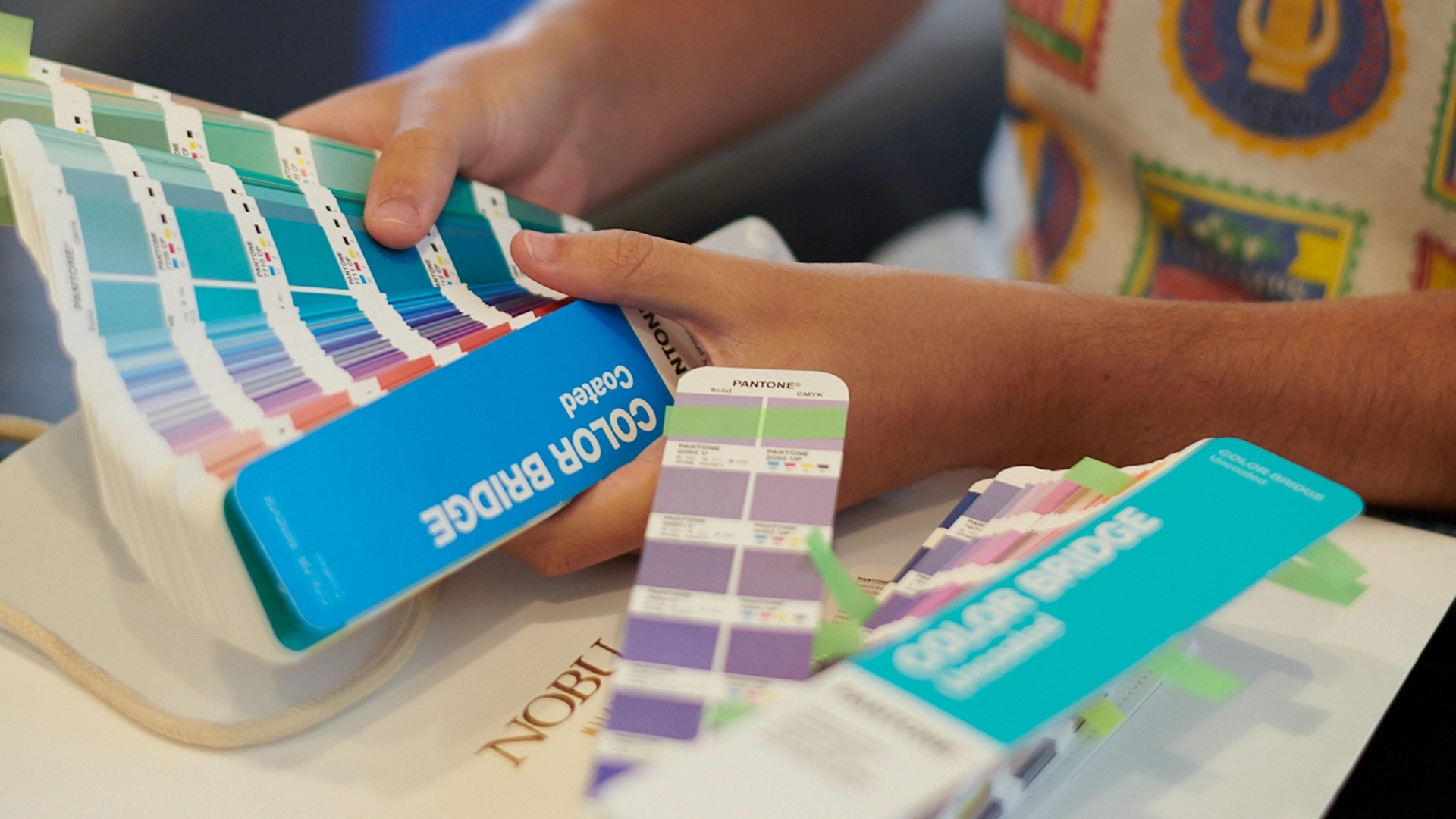
Colour plays a crucial role in shaping your brand's identity, influencing how your personality and tone are perceived by your audience, and impacting the effectiveness of your messaging. Understanding colour psychology is key to making informed strategic choices that resonate with your target audience and position your brand effectively in the market.
Be Introspective
To begin, it is essential to have a deep understanding of your brand's values and mission. Factors such as your brand story, tone of voice, unique selling points (USPs), target audience, and competitors should all be carefully considered. These insights form the foundation of your brand profile, guiding your colour choices to align with your brand's essence.

Colour Impacts Emotion
Emotion plays a significant role in influencing behaviour, making it crucial to select colours that evoke the desired emotional response. While individual responses to colour can vary based on factors such as culture, gender, and personal experiences, there are general associations that can serve as a starting point for your colour palette. For instance:
- Red: Passion, Energy, Excitement, Danger
- Orange: Friendliness, Confidence, Warmth
- Yellow: Optimism, Creativity, Happiness
- Green: Health, Hope, Growth, Nature
- Blue: Trust, Loyalty, Professionalism
- Purple: Wisdom, Luxury, Spirituality
- Black: Sophistication, Power, Elegance
- Gray: Timelessness, Neutrality, Balance
- White: Clarity, Simplicity, Transparency
However, it is important to note that colour selection is nuanced, and a one-size-fits-all approach may not be suitable for every brand.
Suppose you aim for your brand to exude trustworthiness, professionalism, and maturity. Logically, blue may seem like the natural choice. Yet, upon examining the local competition, you may discover that numerous competitors already utilise a similar palette. In this scenario, it could be wise to consider alternative colour options to set your brand apart.

Creating a Colour Palette
Building a cohesive colour palette involves selecting core, secondary, and accent colours.
Core colours serve as the foundation of your palette and are directly associated with your brand, think Vodafone’s red, or Selfridges’ yellow.
Secondary colours support the core colours and broaden your palette. Secondary colours are often (but not always) neutral colours such as black, white, grey, and brown, or tints and shades of your core colours.
Accent colours are used very sparingly and add visual contrast, drawing attention to specific elements within designs.
Colour Ratio
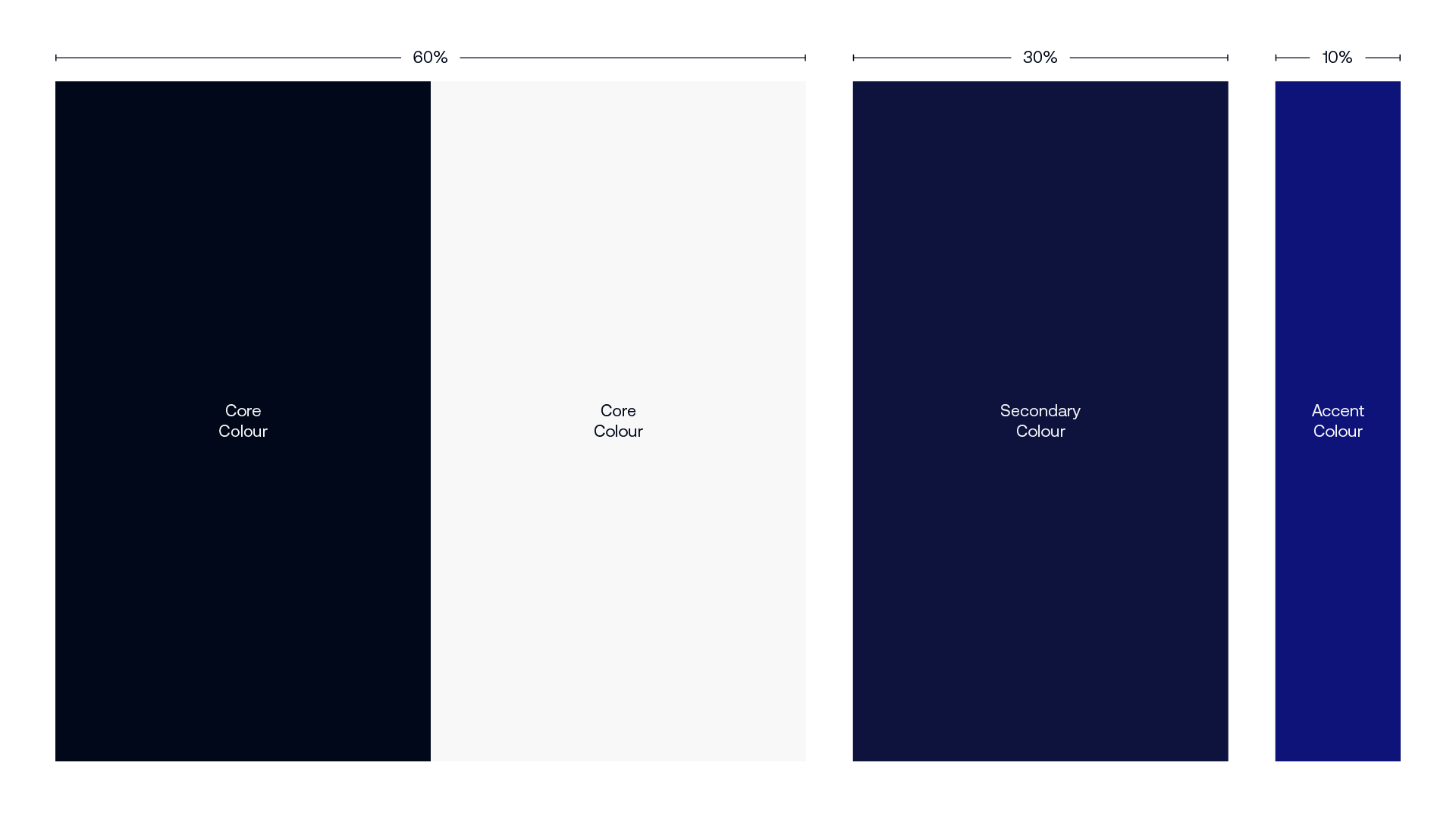
A useful guideline for structuring your colour palette is the 60/30/10 rule:
- 60% of your palette should comprise core colours.
- 30% should be allocated to secondary colours.
- The remaining 10% should be dedicated to accent colours.
This ratio ensures balance and coherence within your palette, enhancing visual appeal and clarity.
Conclusion
In conclusion, a well-crafted colour palette is essential for communicating your brand's identity and message effectively. Remember to keep your palette simple and harmonious, allowing colours to work together seamlessly. By mastering the basics of colour psychology and experimenting with different approaches, you can create a distinct and memorable brand identity that resonates with your audience.
Explore other insights

Founder Story: Stelios
KENSHŌ AGENCY — A FOUNDER STORY
Kenshō Agency wasn’t built just to make better brands.
We kept seeing potential clients come to us, both small and large, with the same issue.
They’d invested real money into branding, and were getting very little back from it. Not because the work was bad, but because it had no real connection to how the business actually ran, its values, or where it was trying to go.
Strategy sat in one place. Execution in another. And the brand ended up somewhere in between, looking right, but not doing much.
We’d both seen this play out repeatedly. Just from different sides of it.
That’s where Kenshō Agency started.
STELIOS' FOUNDER STORY
Stelios grew up around design.
Aesthetics, craft, visual storytelling. That was always there.
But his career took him into operations, finance, and risk, working at director level in environments where decisions had real consequences and there wasn’t room for guesswork.
That changes how you see things.
Brands stop being about visuals, and start becoming about clarity. About trust. About giving people a way to make decisions with confidence.
When Stelios came back to design, he didn’t leave that behind.
He brought it into the work.
So creative decisions aren’t treated as subjective. They’re treated as business decisions. The kind that need to hold up under pressure, not just in a presentation.
WHY KENSHŌ AGENCY EXISTS
Most branding doesn’t fail because of a lack of creativity, it fails because it’s built in isolation.
The people shaping the brand aren’t always close to the business. And the people running the business aren’t always working from a clear brand.
So things drift.
Messaging becomes inconsistent. Decisions take longer. Teams pull in different directions. And money gets spent without real return.
Kenshō Agency exists to fix that.
We work across four areas, culture, business processes, narrative, and visual expression, because that’s where brand actually lives.
Not in a deck.
In how a business communicates, makes decisions, and shows up every day.
When those things are aligned, things start to move.
Decisions get clearer. Execution gets faster. And the brand starts contributing commercially, not just visually.
That’s the role Kenshō Agency plays.
Not just to create brands that look right.
But to build brands that work.
News
{num} mins

Founder Story: James
Kenshō Agency — A founder storyKenshō
Agency wasn’t built just to make better brands.
We kept seeing potential clients come to us, both small and large, with the same issue.
They’d invested real money into branding, and were getting very little back from it. Not because the work was bad, but because it had no real connection to how the business actually ran, its values, or where it was trying to go.
Strategy sat in one place. Execution in another. And the brand ended up somewhere in between, looking right, but not doing much.
We’d both seen this play out repeatedly. Just from different sides of it.
That’s where Kenshō Agency started.
James’ founder Story
Environments with targets, complexity, and constant pressure to deliver.
You learn quickly in places like that.
Good ideas aren’t enough.
What matters is execution. Consistency. Alignment. Getting people, channels, and decisions moving in the same direction, even when things aren’t simple.
James understands how marketing works from the inside. Not how it’s presented, but how it operates day to day inside a business.
He focuses on closing the gap between what a brand is supposed to be, and what actually gets delivered in the market.
WHY KENSHŌ AGENCY EXISTS Why Kenshō Agency exists
Most branding doesn’t fail because of a lack of creativity, it fails because it’s built in isolation.
The people shaping the brand aren’t always close to the business. And the people running the business aren’t always working from a clear brand.
So things drift.
Messaging becomes inconsistent. Decisions take longer. Teams pull in different directions. And money gets spent without real return.
Kenshō Agency exists to fix that.
We work across four areas, culture, business processes, narrative, and visual expression, because that’s where brand actually lives.
Not in a deck.
In how a business communicates, makes decisions, and shows up every day.
When those things are aligned, things start to move.
Decisions get clearer. Execution gets faster. And the brand starts contributing commercially, not just visually.
That’s the role Kenshō Agency plays.
Not just to create brands that look right.
But to build brands that work.
News
{num} mins
Kenshō Agency & Ads.gi Joins Forces with the Capurro Group
Kenshō Agency & Ads.gi Joins Forces with the Capurro Group
After several years of collaboration, we’re thrilled to announce that the Capurro Group has acquired a majority stake in Kenshō Agency & Ads.gi, marking the beginning of a strategic partnership that will propel us to new heights.
INTRO
After several years of collaboration, we’re thrilled to announce that the Capurro Group has acquired a majority stake in Kenshō Agency & Ads.gi, marking the beginning of a strategic partnership that will propel us to new heights.With over 150 years of business expertise, the Capurro Group brings an extensive network and deep industry knowledge, enabling Kenshō Agency to operate on a more global scale.
This partnership strengthens our ability to serve our clients, unlocking new opportunities, markets, and strategic connections that will enhance the value we deliver to them.
Having worked together for nearly a decade, this move is a natural evolution of our shared vision. With Capurro Group's backing, Kenshō Agency is poised for unprecedented growth while continuing to innovate and push boundaries.
We’re incredibly excited for this next chapter and the possibilities it brings, not just for us but for our clients, partners, and the industries we serve.
Stay tuned for what’s next!
News
{num} mins
Heading 1
Heading 2
Heading 3
Heading 4
Heading 5
Heading 6
Lorem ipsum dolor sit amet, consectetur adipiscing elit, sed do eiusmod tempor incididunt ut labore et dolore magna aliqua. Ut enim ad minim veniam, quis nostrud exercitation ullamco laboris nisi ut aliquip ex ea commodo consequat. Duis aute irure dolor in reprehenderit in voluptate velit esse cillum dolore eu fugiat nulla pariatur.
Block quote
Ordered list
- Item 1
- Item 2
- Item 3
Unordered list
- Item A
- Item B
- Item C
Bold text
Emphasis
Superscript
Subscript