Insights
November 20, 2024
{num} mins
Digital vs. Print: Design Considerations for Different Channels
Crafting compelling visuals for different channels requires an in-depth understanding of the nuances that set them apart. In this article we delve into the realm of digital and print design, exploring the key considerations that guide us to create work for both mediums.
The Digital Canvas
1. Interactivity
Digital design invites interaction. Consider how users will engage with your content, whether it's through clickable elements, animations, or user-friendly interfaces. Harness the power of interactivity to captivate your audience.
2. Responsive Design
The digital landscape spans a multitude of ever-changing devices, from smartphones and tablets to laptops and desktops. When creating for web ensure your design is responsive, adapting seamlessly to different screen sizes. A user's experience should be as consistent as possible no matter the device used.
3. Typography and Readability
Be deliberate in your font choice when designing for screens. Readability is fundamental in order to successfully communicate information at small scales, and your decisions will directly impact the end user experience. Pay attention to font sizes, line spacing, and colour contrast in order to facilitate a comfortable read.
4. Visual Consistency
Consistency is key in the digital realm. Maintain a unified visual language across your website, apps, and social media channels. Colours, font choices, and imagery should align seamlessly with your brand identity.

The Timeless Allure of Print
1. Tangible Presence
Printed material offers a tangible experience that digital deliverables can't replicate. The choice of paper stock, special finishes, and textures becomes vital to creating a memorable customer experience. These tactile elements can greatly enhance the perception of your brand and leave a lasting impact on your consumer base.
2. Layout
Layout is integral to good design across both digital and print. When designing for offline mediums designers must take into account additional layout considerations such as bleed and margins. These help to ensure that printed material can be correctly trimmed to size and delivered in a way that promotes ease of use.
3. Colour Accuracy
Print applications demand precise colour management. Designers work with CMYK colour profiles and Pantone swatches to ensure colours are reproduced accurately and consistently across deliverables. Material choice greatly impacts colour perception and is a factor that must be taken into account when designing for print. We suggest consulting with your printer before sending a job to press in order to minimise the risk of a print run falling short of expectations.
4. Resolution and Image Quality
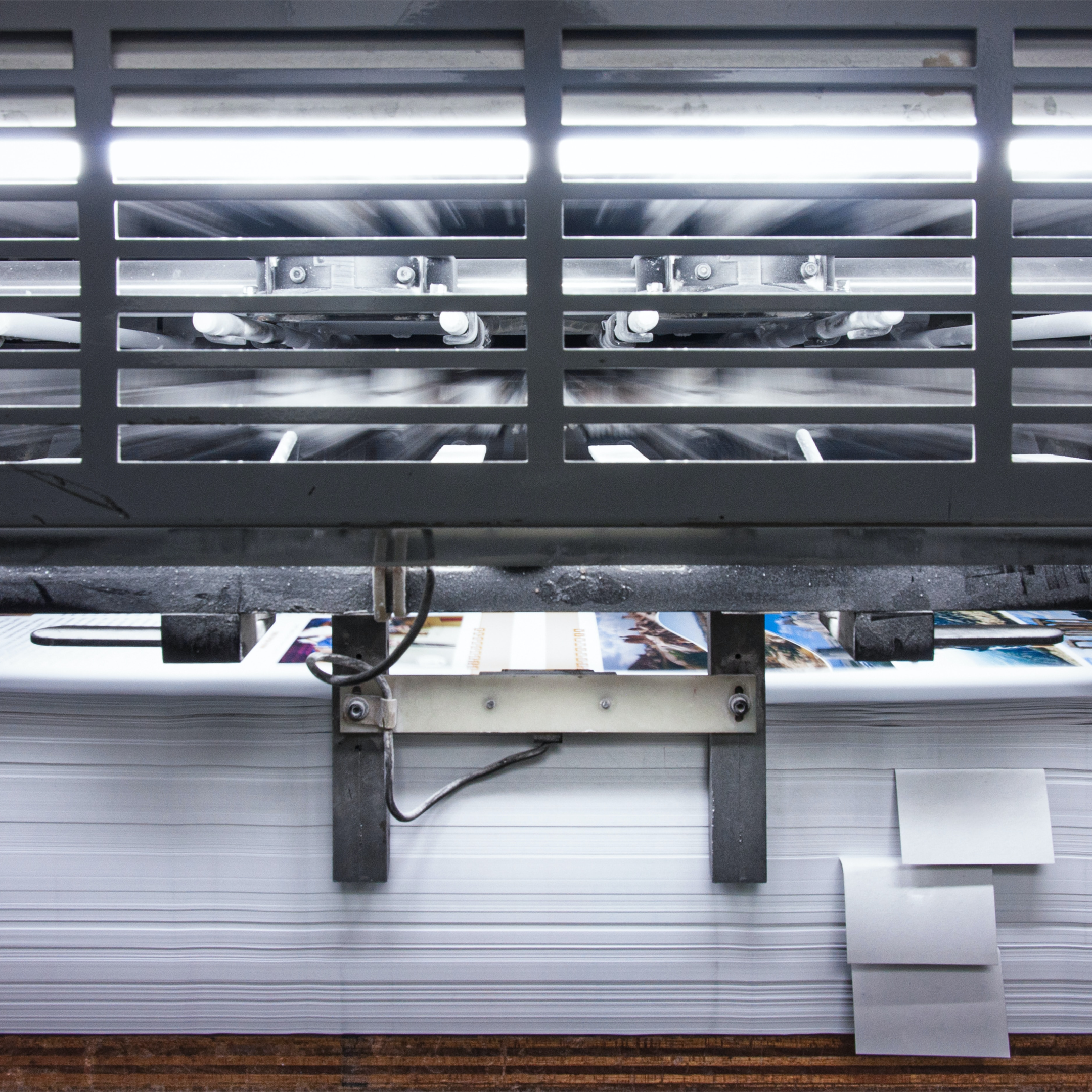
High-resolution images are a must in print design to avoid pixelation. Images must be crisp and detailed. Printers often require images to be at least 300 DPI (dots per inch).
The Synergy of Multichannel Branding
1. Unified Branding
Maintain a consistent brand identity across digital and print. Whether your audience encounters you online or offline, the essence of your brand should remain the same.
2. Cross-Promotion
Leverage the strengths of each medium to cross-promote. Digital channels can drive traffic to print materials, and vice versa. This synergy enhances your reach.
3. Analytics and Tracking
Digital design offers the advantage of analytics and tracking. Use these insights to understand user behaviour and fine-tune your strategies. This data-driven approach can inform improvements in both digital and print design.
In Conclusion
In the dynamic world of design, digital and print are two distinct canvases, each with their own unique characteristics. To make the most of your brand's presence, it's crucial to understand the design considerations for each medium.
At Kenshō, we specialise in navigating this intricate landscape, crafting designs that resonate across digital and print channels. Get in touch with us to explore how we can elevate your brand's presence and create a seamless visual experience that spans the digital and print realms.
Explore other insights

Founder Story: Stelios
KENSHŌ AGENCY — A FOUNDER STORY
Kenshō Agency wasn’t built just to make better brands.
We kept seeing potential clients come to us, both small and large, with the same issue.
They’d invested real money into branding, and were getting very little back from it. Not because the work was bad, but because it had no real connection to how the business actually ran, its values, or where it was trying to go.
Strategy sat in one place. Execution in another. And the brand ended up somewhere in between, looking right, but not doing much.
We’d both seen this play out repeatedly. Just from different sides of it.
That’s where Kenshō Agency started.
STELIOS' FOUNDER STORY
Stelios grew up around design.
Aesthetics, craft, visual storytelling. That was always there.
But his career took him into operations, finance, and risk, working at director level in environments where decisions had real consequences and there wasn’t room for guesswork.
That changes how you see things.
Brands stop being about visuals, and start becoming about clarity. About trust. About giving people a way to make decisions with confidence.
When Stelios came back to design, he didn’t leave that behind.
He brought it into the work.
So creative decisions aren’t treated as subjective. They’re treated as business decisions. The kind that need to hold up under pressure, not just in a presentation.
WHY KENSHŌ AGENCY EXISTS
Most branding doesn’t fail because of a lack of creativity, it fails because it’s built in isolation.
The people shaping the brand aren’t always close to the business. And the people running the business aren’t always working from a clear brand.
So things drift.
Messaging becomes inconsistent. Decisions take longer. Teams pull in different directions. And money gets spent without real return.
Kenshō Agency exists to fix that.
We work across four areas, culture, business processes, narrative, and visual expression, because that’s where brand actually lives.
Not in a deck.
In how a business communicates, makes decisions, and shows up every day.
When those things are aligned, things start to move.
Decisions get clearer. Execution gets faster. And the brand starts contributing commercially, not just visually.
That’s the role Kenshō Agency plays.
Not just to create brands that look right.
But to build brands that work.
News
{num} mins

Founder Story: James
Kenshō Agency — A founder storyKenshō
Agency wasn’t built just to make better brands.
We kept seeing potential clients come to us, both small and large, with the same issue.
They’d invested real money into branding, and were getting very little back from it. Not because the work was bad, but because it had no real connection to how the business actually ran, its values, or where it was trying to go.
Strategy sat in one place. Execution in another. And the brand ended up somewhere in between, looking right, but not doing much.
We’d both seen this play out repeatedly. Just from different sides of it.
That’s where Kenshō Agency started.
James’ founder Story
Environments with targets, complexity, and constant pressure to deliver.
You learn quickly in places like that.
Good ideas aren’t enough.
What matters is execution. Consistency. Alignment. Getting people, channels, and decisions moving in the same direction, even when things aren’t simple.
James understands how marketing works from the inside. Not how it’s presented, but how it operates day to day inside a business.
He focuses on closing the gap between what a brand is supposed to be, and what actually gets delivered in the market.
WHY KENSHŌ AGENCY EXISTS Why Kenshō Agency exists
Most branding doesn’t fail because of a lack of creativity, it fails because it’s built in isolation.
The people shaping the brand aren’t always close to the business. And the people running the business aren’t always working from a clear brand.
So things drift.
Messaging becomes inconsistent. Decisions take longer. Teams pull in different directions. And money gets spent without real return.
Kenshō Agency exists to fix that.
We work across four areas, culture, business processes, narrative, and visual expression, because that’s where brand actually lives.
Not in a deck.
In how a business communicates, makes decisions, and shows up every day.
When those things are aligned, things start to move.
Decisions get clearer. Execution gets faster. And the brand starts contributing commercially, not just visually.
That’s the role Kenshō Agency plays.
Not just to create brands that look right.
But to build brands that work.
News
{num} mins
Kenshō Agency & Ads.gi Joins Forces with the Capurro Group
Kenshō Agency & Ads.gi Joins Forces with the Capurro Group
After several years of collaboration, we’re thrilled to announce that the Capurro Group has acquired a majority stake in Kenshō Agency & Ads.gi, marking the beginning of a strategic partnership that will propel us to new heights.
INTRO
After several years of collaboration, we’re thrilled to announce that the Capurro Group has acquired a majority stake in Kenshō Agency & Ads.gi, marking the beginning of a strategic partnership that will propel us to new heights.With over 150 years of business expertise, the Capurro Group brings an extensive network and deep industry knowledge, enabling Kenshō Agency to operate on a more global scale.
This partnership strengthens our ability to serve our clients, unlocking new opportunities, markets, and strategic connections that will enhance the value we deliver to them.
Having worked together for nearly a decade, this move is a natural evolution of our shared vision. With Capurro Group's backing, Kenshō Agency is poised for unprecedented growth while continuing to innovate and push boundaries.
We’re incredibly excited for this next chapter and the possibilities it brings, not just for us but for our clients, partners, and the industries we serve.
Stay tuned for what’s next!
News
{num} mins
Heading 1
Heading 2
Heading 3
Heading 4
Heading 5
Heading 6
Lorem ipsum dolor sit amet, consectetur adipiscing elit, sed do eiusmod tempor incididunt ut labore et dolore magna aliqua. Ut enim ad minim veniam, quis nostrud exercitation ullamco laboris nisi ut aliquip ex ea commodo consequat. Duis aute irure dolor in reprehenderit in voluptate velit esse cillum dolore eu fugiat nulla pariatur.
Block quote
Ordered list
- Item 1
- Item 2
- Item 3
Unordered list
- Item A
- Item B
- Item C
Bold text
Emphasis
Superscript
Subscript